Mentors, Coaches, and Internal Grooming: Knowing When to Seek the Right Support

The most successful executives are not those who face every challenge alone—but those who know when, where, and from whom to seek support.

Recognizing the right form of guidance at the right time can define the trajectory of a leadership career.

Leaders often speak about the importance of seeking expert guidance at various stages of one’s professional journey. Yet a critical question remains: when should an executive seek such support, and from whom?

Every career progresses through distinct phases, each presenting its own set of challenges. Not every challenge requires external intervention, nor is it practical to seek help at every crossroads. Often, a mentor plays a crucial role by offering perspective and outlining possible options. A mentor does not prescribe solutions; instead, they encourage independent thinking, enabling individuals to assess their circumstances and choose the most appropriate path forward.

A business coach, however, takes a more structured and goal-oriented approach. Coaching engagements typically occur within a defined timeframe and are focused on specific developmental objectives or transitional challenges. Business coaches are frequently engaged under formal agreements with an organization and work closely with executives preparing for expanded leadership responsibilities. This may include building capabilities to engage effectively with key stakeholders—peers, board members, line managers, customers, and the broader workforce. For executives stepping into senior roles, coaching often extends to managing interactions with industry analysts and the media.

Beyond mentoring and coaching, many organizations emphasize internal leadership development as a strategic priority. Senior leaders—often the Chairman, CEO, or Managing Director—identify high-potential executives at the second or third leadership level and actively prepare them for future roles. With a deep understanding of an individual’s strengths and development areas, these leaders groom talent to ensure continuity and stability when critical positions become vacant. Organizations that invest in this approach demonstrate a strong belief in growing leadership from within rather than relying solely on external hires.

As you reflect on your own leadership journey, consider this:

Are you relying on the right form of support for the challenges you face today?

Share your thoughts or experiences—mentoring, coaching, or internal grooming—and let’s start a conversation on how leaders can better prepare for what’s next.

Stretching too far

The recent incident of Indigo reminds us of the need for exercising caution and restraint in running an operation in a factory or in a service sector like Airlines. In such a lifeline of an industry, the risk assessment needs to be far more vigilant and awareness of risk mitigation procedures. A business turning a blind eye is vulnerable in the long run. A CEO cannot work only to please the promoters and investors.

We had seen earlier that Sahara,Jet Airways and King Fisher got into different version of risk and the basic reason for their failures was a poor assessment of debt servicing and greedy promoters. ‘One cannot eat more than that can be chewed’ is an apt proverb that describes these case studies that made the lenders and investors poor with liabilities and litigations. Another glaring case study is the failure of Future retail group that borrowed more than it could re-pay and the business didn’t anticipate the risk of a new selling model – on-line sales that Amazon & FlipKart pioneered in India. The boards of these companies ignored their role in protecting the investors and customers and fell prey to the hypes surrounding the short lived successes of these airlines. The watch dogs of the government, the regulating bodies,turned other side and let the promoters have their own ways. The control mechanism woefully failed.

Another recent case study is that of Byju that was among the pioneers in online tutoring model but fell short of preference solely due to it becoming financially unviable and a loss making start-up venture. High profile advertising, heavy expansion across the country and the low cost competition aping the model.

An operation in a factory or a service line is capable of with standing a certain limit with a tolerance factor and stretching it both on financial and humanitarian fronts is inviting big trouble that cannot be undone overnight and calls for rebuilding absorbing the fianancial loss and losing the goodwill of customers.

#safety

#riskassessment

#operationalsafety

Resistance to change – how our brain works

If we want to take to a new habit or a new routine or a new home, our brain doesn’t accept it for some days because it is used to the same way of doing things. It offers resistance when we change our habit or routine.

We are used to wearing our watches on the left hand and when we move it to the right, we feel it weighs more. We want to switch it back immediately to our usual hand. But when we keep wearing it on the right hand for some days, the brain accepts it and we no longer feel it weighs more.

Similarly we are used to do our morning walk on the streets we are familiar with. When we change to a new route, our brain doesn’t feel comfortable for a few days.

Any new habit or routine takes time to get used to.

Achievers, as they say, do things differently to be successful.

Watch this interesting clip on how we need to embrace change from the routine.

#newhabits

#brainfunction

https://lnkd.in/enkgv-FV

Rural India – what it needs besides income generation

I don’t know if there is an index like Rural Improvement Index – RII or Ri2 index. I am also not aware of any Indian or state government agency tracking these metrics and taking corrective actions for a sustainable and happy living.

This index needs to define the following metrics and is published as a score of x/10. The coordinating agency must work with individual government initiatives addressing these important aspects rural population and rural India. The mass migration of rural youths migrating to bigger towns and cities must be arrested for a better balance of opportunities and economic progress.

*Health – Reach, infra and affordability

*Education – Relevance, Vocational curriculum and affordability

*Jobs – New jobs, employability and geo relevance

*Entrepreneurship – growth areas, financial assistance and mentorship

*Governance – People friendly, optimal resource utilization, Merit focused

*Sustainability – Preservation of wet lands, water sources and forests

Perspectives – there is no right or wrong.

It is all about perspectives that shape the opinions of people. Every action or complaint has two versions of perspective – one of the doer and the other of the onlooker. The justifications of action or complaint determine if the action was right or wrong.

Example: an interesting forward in my WA feed. Source unknown. But beautifully put across….

One Story, Two Perspectives

A famous book writer sat in his study. He took out his pen and began to write:

“Last year, I had surgery to remove gallstones. I was bedridden for a long time.

In the same year, I turned 60 and was retired … quitting a company that I loved so much. I had to leave the job I’ve been doing for 35 years.

That same year I was abandoned by my beloved mother who passed away.

Then, still in the same year, my son failed his final medical exam because of a car accident. Repair costs from the car damage marked the peak of bad luck last year.”

At the end he wrote:
“What, what a bad year!”

The writer’s wife entered the room and found her husband who was sad and pensive. From behind, the wife saw the husband’s writing. Slowly she backed away and left the room.

15 minutes later she came back in and put down a piece of paper with the following words:

“Last year, my husband finally managed to get rid of his gallbladder which had been making his stomach hurt for years.

That same year, I am grateful that my husband was able to retire in a healthy and happy state of mind & body. I thank God he was given the opportunity to work and earn for 35 years to support our family.

Now, my husband can spend more of his time writing, which has always been his hobby.

In the same year, my 95 year old mother-in-law, without any pain, returned to God in peace.

And still in the same year, God protected our son from harm in a terrible car accident. Our car was seriously damaged by the accident, but my son survived without any serious injuries.”

In the last sentence his wife wrote:
“Last year was a year full of extraordinary blessings from God, and we spent it full of wonder and gratitude.”

The writer smiled with emotion, and warm tears flowed down his cheeks. He was grateful for a different point of view for every event he had gone through the past year. A different perspective of the same events now made him joyful.

Dear Family and Friends, in this life we ​​must understand that it is not happiness or joy that makes us grateful. It is gratitude that makes us happy/joyful! Let’s practise seeing events from a positive point of view and keep envy away from our hearts.

”We can complain because rose bushes have thorns, or rejoice because thorn bushes have roses.”
Abraham Lincoln

Good to re-read this piece even though you may have read it before.

Have a nice day 😊😊😊

Image courtesy: Silaii.com

How much enough is enough?

We keep multiplying wealth all the time. It is very rare that people don’t have this habit. We always feel so insecure in both our career and profession, we tend to think far ahead about us and our children. Additionally we have the fear that our life is unstable as countries go to war, calamities strike nature, people protest and diseases are on the rise.

Many of us have heard about Maslow’s hierarchy of needs that has 5 stages starting from Psychological needs followed by safety, love & belonging, esteem and self-actualisation needs. But over the years researchers added another need as you could see from this below research report.

“In the time since Maslow published his original paper, his idea that we go through five specific stages hasn’t always been supported by research. In a 2011 study of human needs across cultures, researchers Louis Tay and Ed Diener looked at data from over 60,000 participants in over 120 different countries. They assessed six needs similar to Maslow’s: basic needs (similar to physiological needs), safety, love, pride and respect (similar to esteem needs), mastery, and autonomy. They found meeting these needs was indeed linked to well-being. In particular, having basic needs met was linked to people’s overall assessment of their lives, and feeling positive emotions was linked to meeting the needs of feeling loved and respected.”

When all these needs are taken of,what makes people to accumulate wealth more than they need in their life time or in the life time of next generations. We used to hear in villages about wealthy people that they have accumulated wealth for 7 generations.

In a country like India where per capita income is not as high as some western countries, the income doesn’t get distributed to the needy or there are no avenues to make that per capita income higher. We don’t have to follow communist mind set to distribute wealth equally but resources cannot be cornered by people who are already wealthy and they have to be made available to every citizen rather than the super rich ( businessmen, politicians etc) going on the crazy path of wealth accumulation.

To get back to the topic’ enough is enough’, how do we develop a mind to say No to further wealth creation. Will that erode our confidence or create a sense of contentment? Will the mind refuse entitlement and let go to others? Will it diminish our superiority in the society? Will it make us less powerful and authoritative?

It is not only we develop this attitude of ‘enough is enough’ but inculcate it to younger generations because they are the ones who are poised to create a world that is peaceful and orderly.

‘Enough is enough’ needs to go deep rooted in our minds.

#enoughisenough

#wealthdistribution

#hierarchyofneeds

* https://www.thoughtco.com/maslows-hierarchy-of-needs-4582571

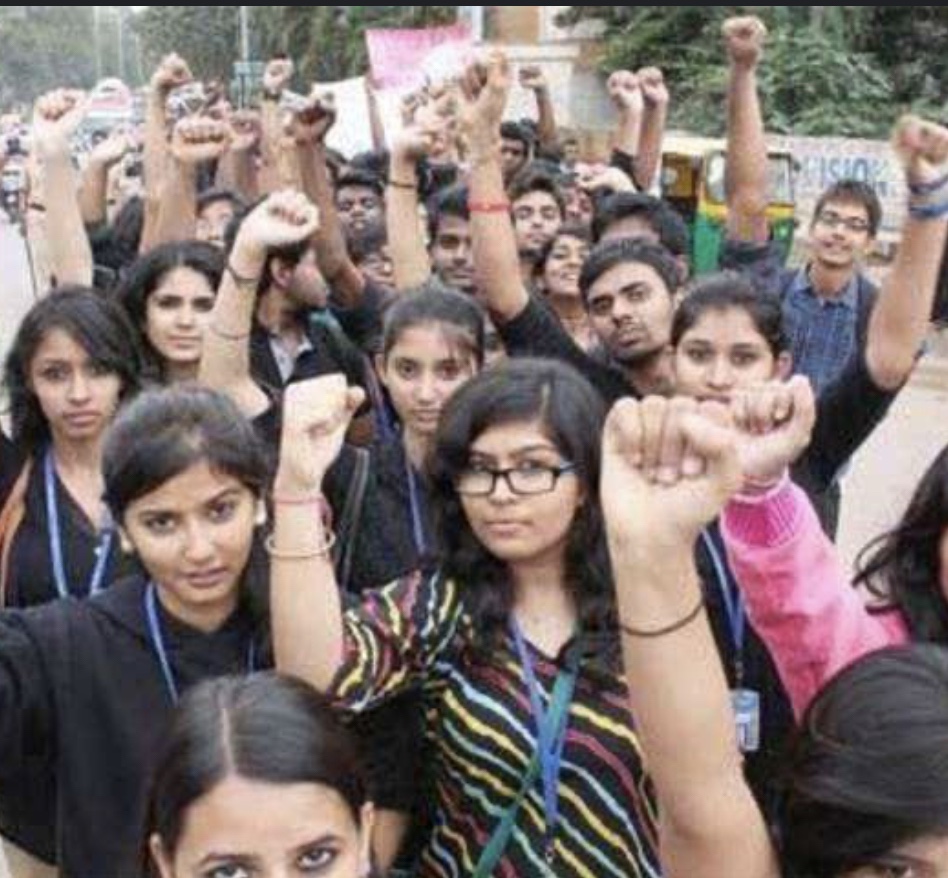
Is Gen Z an easily manipulated group?

Recent incidents of protests and vandalism across the world in educational campuses, and the numerous rallies, hate speeches, social media posts, and interviews provide ample evidence to support this view.

Obviously, they are not the only ones who stand for justice, yet they take the law into their hands and indulge in activities that put their own community and people’s lives at risk, in addition to damaging public and commercial properties.

They may have justifications for expressing their anger and disapproval but arson, riots, vandalism, and taking lives are not the means of achieving their objectives. If they feel that is the only way to draw attention, then they are sadly mistaken. The public’s ire turns against them, and they become groups that do not attract any sympathy for their causes, however just they may be.

Gen Z has the power to change corrupt and people-unfriendly governments, and they must use it properly for the right cause. Gen Z could do wonders in science and scientific innovations when they channelise their focus and knowledge.

Scientific prowess needs to take over the management mindset

Not a correct statement, one would think.

Let us think about the Indian context. We spend 0.64% of GDP on R&D. This speaks volumes of our apathy towards deep research, innovation and IP creation. We are no way comparable to China, Japan, US and Israel.

We are so engrossed in creating managers for today and tomorrow but have failed to recognise the fact that science is a fundamental factor to succeed as a nation or a super power. We have had enough of managers and let us focus / spend more on science and scientific efforts. Young minds have to be prepared towards research and innovation for the future. Academicians and parents have a responsibility to encourage students to opt for science curricula.

Thankfully the crave for Information technology engineers have vaned in the last few years at the engineering institutes and attention is turning towards more enrolment in core engineering and science subjects.

Corporates on the other hand are not spending enough on science or creating / supporting more scientific bodies that propel R&D efforts to a different level to compete with other superpowers.

We have progressed well in space and defence technologies but going slow on medical research, agricultural research, live stock research, health care research etc. Government bodies like CSIR, DRDO, ICMR, ICAR, NRDC, NIBMG have to step up on the pedal with the support of big corporates.

The whole world has moved towards AI and lacking in fundamental research and R&D initiatives will only retard our adoption to AI in every sphere of industrial automation and innovation.

Our habits are shaped by corporates

Frequently, younger generations caution us that our diets lack sufficient protein, which can compromise our muscle and bone health, causing premature aging.

Nonetheless, our eating habits are shaped by corporate entities seeking to promote their products. Surveys, often unsupported by credible health organizations, exaggerate mineral deficiencies in our diets. These findings benefit Ready-to-Eat and Food Supplement manufacturers, who exploit our concerns to boost sales.

The trend of kitchenless homes and the abundance of dining establishments threaten our tradition of home-cooked meals. Although our eating habits may seem to have changed, we are, in fact, consuming the same traditional foods.

The fashion industry has skillfully engineered our preferences, creating a cycle of consumption fueled by emotional appeals. It is vital to scrutinize advertisements and surveys, recognizing the potential for manipulation.

Surviving is not the same as Succeeding

You have been at a place for many years and always lament that you are not getting noticed. At the same time, you also see some of your colleagues who have been with you for a long time get the boot. You wonder what is this and why you are not pushed to the exit.

Managers hunt for associates who are warming the seats with no real hunger to meet the timelines and not being creative to solve problems. It is not out of sympathy you did not get pushed to the exit but inadvertently you may have shown sparkles of brilliance or hard work at times and that have helped you in good stead.

Are you happy at what you are doing and feeling you are just surviving?

This is the question that comes to the minds of many and they are at cross roads where to go and what to do.

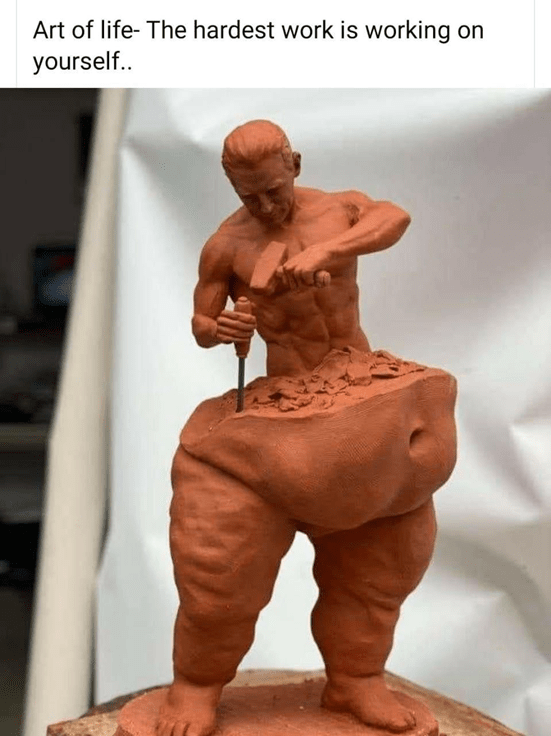
Survival doesn’t take you anywhere in your career and it makes you to blunt all your skills. One needs to be at the top of the game to remain relevant in the organisation. Sharpening the skills, adding more to your skill set and a lot of self motivation helps you to get noticed and that is the sure way to move up. If you are finding it hard to self-motivate and mend the flaws in your system do seek a good mentor to nudge you to be always sharp and to possess a mindset to seize opportunities.

The bottom line is never be content with surviving each day. It requires a huge commitment and consistently hard work to succeed.

Survival blunts the skills, Success sharpen them!

Without ‘U’, sUccess never happens.