2024 had a lot of ups and downs.

The year that we are biding adieu to, 2024 has been an eventful year for India and the world.

The world is still reeling under the impact of wars that have killed and displaced innocent millions in Russia, Ukraine and Middle East. There has been civil wars in a few geographies too and they have taken a heavy toll of people. These are close on the heels of millions that died due to Covid. You could call these catastrophical deaths in the last 4 years akin to and extended WW3.

Elsewhere in the world people continue to live under fear of internal conflicts, political turmoils and nature’s fury. Countries put their own interest ahead of other global priorities and concerns as they try to protect their identity and security at the cost of escalating cost of living, social unrest , unemployment and sustainability issues. Trade barriers continue to hog the limelight as major countries move to enforcing protectionist policies. China continue to produce like never before to handle rising labour costs with high export volumes and is dumping their goods into countries that depend on them and its technology.

Four elections defined the way people chose local issues over the global issues- in India, Japan, UK and US. The people resolved to put their country, growth and well being as their primary mandate and chose leaders / parties whom they want to lead them. Excepting India, other three nations dismissed the ruling dispensations and chose new leaders to charter new paths.

In science and technology space, new milestones were achieved in space experiments and the most significant is the advent of Artificial Intelligence that is going to define new innovative revelations in improving healthcare, manufacturing and genetic conditions. Ai is definitely a boon and a concern for the world. The world is anxiously waiting to heap its benefits.

Major countries are taking huge efforts in predicting and thwarting climatic imbalance as we see changing weather patterns and global warming pose major worries to our next generations.

Immigrancy has assumed enormous importance and countries that are bearing the impact of both legal and illegal immigrancy have to face the fury of people as their resources are at peril. The cultural habits, militant behaviour and religious fanaticism of insurgent groups apparently destroy the peace and harmony of the citizens.

Let us fervently hope that peace and good sense prevail all over the world in 2025 and beyond.

Best wishes for a happy new year!

happynewyear2025

Categories of leaders

There are 4 types of leaders in Indian business:

Visionaries – they anticipate the industrial needs of country and expectations of people and set up industries that serve every common man- The founders of business empires, TATAs, Birlas, Godrejs…

Path breakers – they imagine big about the hidden potential of people and the country and bring them out to create revolution – Verghese Kurien, Dhirubai Ambani, M S Swaminathan, Walchand, Narayana Murthy, Sundaram Iyengar…

Super Managers – There is a long list of names in this category. They own businesses and head them too. They are largely entrepreneurs and still work as executives in their organisations. Mukesh Ambani, Gautam Adani, Bhavish Agarwal, Falguni Nayar, Lakshmi Mittal, Deepinder Goyal, Nithin Kamath, Dilip Sanghvi, Sridhar Vembu, Radha Vembu, Kiran Mazumdar Shaw, Radhakrishnan Damani..,,

Professionals – all those in public sector and private sector CEOs and MDs.

There is no dearth of leadership in India and hope it is leveraged more than what is being done now. We need their collective wisdom to achieve $5T economy sooner than we had planned for.

Confidence

Many people say someone or a group is over confident in pursuing an objective to its logical conclusion.

There is nothing like over confidence or under confidence in dictionary. Confidence denotes the ability to gather resources and skills to achieve an objective or a goal. The people who do it, know very well that they are capable of succeeding in their attempt. They believe they have the skills or expertise. For an outsider, evaluating an individual or a group to be confident or over confident is more due to a perception of strengths and weaknesses of people attempting a goal. Their perception may not be always correct yet they discourage any such attempt.

Confidence is belief and belief is an awareness of inner strength and to know what is possible or not. A student is always in top 5 in a class and if he or she believes she could be the top student in the class, then it is a belief of own ability. On the contrary if he or she is in the bottom 10 in a class, believing that he or she could top the class is said to be over confident by others.

Know your strength and skills before believing in your ability to succeed.

Confidence is always a positive feel and cultivating it helps in dealing with people the right way. It shouldn’t be construed as arrogance but plain belief in oneself.

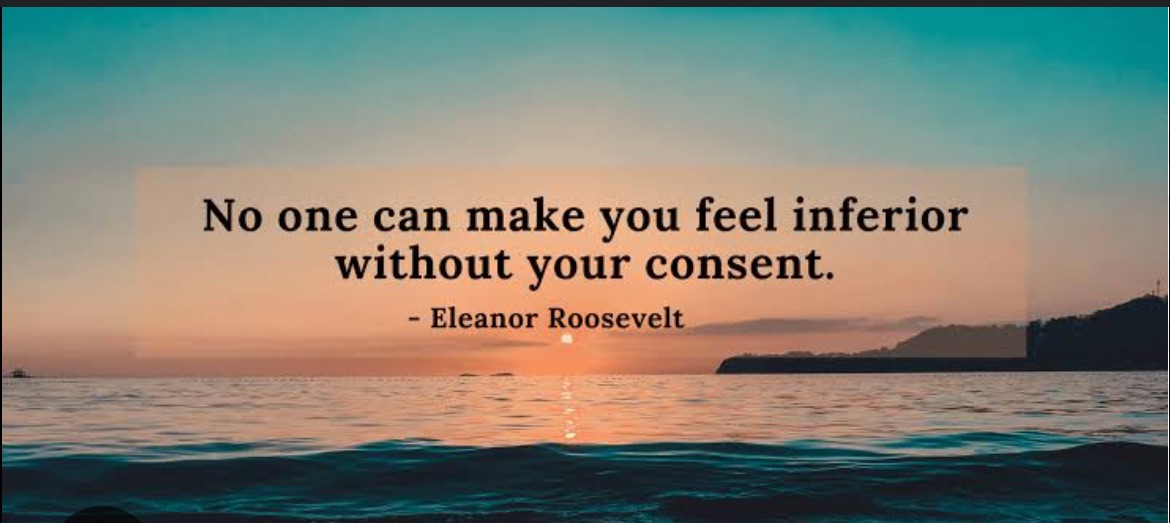
“No one can make you feel inferior without your consent” – Eleanor Roosevelt.

CIO & changing priorities

A CIO is no longer a person managing IT infrastructure, software applications deployment and keeping them running . The role today calls for closer involvement with the marketing team too. The customer feedback or competition provides a lot of data to the marketing team who in turn look upto CIO to slice and dice the data to re align their marketing strategy. The data is all about changing customer demographics, customer influencers, competition, income parity, cultural influence and pricing models. CIO needs to analyse these data and for this Data analytics is an essential tool.

Data analytics is crucial is for a business to survive and move forward. There are many software tools available to do this work and CIO would need experts to help them to analyse and interpret the data.

“Data analytics converts raw data into actionable insights. It includes a range of tools, technologies, and processes used to find trends and solve problems by using data. Data analytics can shape business processes, improve decision-making, and foster business growth”.

We,at Boardconnect India, help you in your efforts to achieve digital needs to grow and stay competitive.

http://www.boardconnectindia.com

#bci

#dataanalytics

#digitalttransformation

#digitaladvisory

Globalisation Today – 3 mega trends!

We have seen some decades in the past causing the world more harms in terms of economic and social disturbances. The decade of 2001-2010 was undoubtedly the one that derailed both social and economic worlds. We saw 9/11 attack that had sent the shivers down the world of what proportion the terrorism had reached as it plucked away so many innocent lives. Towards the end of that decade there was another catastrophe in the form of the Great Economic recession that left many jobless and countries had to suffer its aftermath for the next many years.

The decade that we are living in today,2020 onwards until this moment, has been the most dreaded and forgettable period. We are still in the middle of this decade and we shudder to think what lies ahead till 2030 and beyond. We had witnessed millions of people getting affected and losing their lives due to COVID. Further we are in the midst of two wars that don’t seem to be ending anytime soon and again millions have lost their lives and were displaced. The leaders of the nations have to be more responsible shedding away their intolerance to fellow mankind, embrace peace that will allow people to stay focused on living their life.

These happenings prove beyond doubt that technology has advanced to an extent that we could come up vaccine to arrest the loss of lives in a shorter period of time but the same technology has also made the warfare more dangerous than the previous world wars.

The slowdown of world trade that resulted from the financial crisis was exacerbated by protectionist policies and nationalist movements in recent years. The COVID-19 health crisis that brought economic collapse has prompted policymakers to take deliberate steps toward deglobalization. While the current trend is not likely to end globalization, some argue that “globalization can be reversed, at least partially.” ( Reference note # 2)

The social integration of people has been so rapid due to digital technologies but the economic integration of businesses or inter-trade between countries has somewhat diminished with countries becoming protectionists.

The UN says that there are three mega trends seen today that are related globalisation: shifts in production and labor markets, rapid advances in technology, and climate change. ( Reference note # 3)

The below mentioned notes are older but they seemed to be happening today.

Notes

1. KOF Swiss Economic Institute, Press release. KOF Globalisation Index: Weaker World Trade Slowing Globalisation External
October 23, 2019. Back to text

2. Douglas A. Irwin. The pandemic adds momentum to the deglobalization trend. External
Peterson Institute for International Economics. April 23, 2020. Back to text

3. United Nations General Assembly. Fulfilling the promise of globalization: advancing sustainable development in an interconnected world. Report of the Secretary-General. External
2017.

Trends in Globalization – Globalization: A Resource Guide – Research Guides at Library of Congress

What is ailing Indian education system?

The majority of students that come out of schools and colleges lack both in employable and social skills. The unemployed care a damn about social skills and they fall apart in a set-up that is responsible, compassionate and yielding. To destroy a country, it is enough to lower the quality of education by preparing the students only to write exams or allowing cheating in exams.

We have been discussing for a decade about how Indian educational system is short of practical aspects of learning and innovating and not broad based. The stake holders of education – students, teachers, parents, academia, industry bodies and Governments- have consistently failed to revamp the system to be in tune with technological and social necessities. The National Education Policy is attempting to bring in a semblance of equitable, inclusive and a holistic approach to primary and school education and the fruits of this initiative will take time to see the results.

How do we rectify the system so that it imparts skills that are relevant today and tomorrow? Many educationalists have elaborated on it but fundamentally what is preventing it to be accepted is those politicians with parochial interest and an hidden agenda. They don’t let the experts to do their job and attempt to dilute the curriculum with their own ideology. Secondly the teachers have to be brought upto speed to new methods of teaching rather than coaching students to ace the exams. They don’t get themselves updated with newer teaching methods and tools besides not knowing how to deal psychologically with students.

The education in future will be teacher centric and technology is going to play a huge role in shaping both teachers and students. The students need to have a growth mind set, curiosity, experimenting capability and risk taking attitude besides a making them to learn to accept failures.

Many agencies have to be drawn into the discussion / action with no interference from politicians manning the government. PTA, academic experts, technology experts, psychologists, industrial bodies, corporates have to come together in this mammoth effort. The future belongs to students of today and let us all participate to make them technocrats, scientists, professionals and social leaders with moral ethics and good work culture.

#educationfortomorrow

#qualityofeducation

Transformational Leadership

It is not about making wholesale changes in business or in a social venture or in a government. It is a step by step process that is well thought out for its impact and the changes it would bring in people and their actions. Any changes that would not contribute to positive change in status quo should be avoided as they would only create chaos and confusion.

The changes that are being planned are encapsulated in a larger program called Transformation and they could be in adapting best business practices, innovative culture, process automation, increasing people potential, inclusive, becoming more socially relevant and above all feeling pride in what people, organisation or country do.

The leaders driving these changes need to de aware of the change in the behavioural pattern of the people that are part of the exercise. The leaders have to push people towards peak performance without them knowing it or exerting pressure on them. The team needs to be always aligned with the goals and that leads them to give their best without expecting any huge rewards. The impact it has created is itself a reward as they find new motivation, enthusiasm and energy to deliver the results.

History has taught us such transformations have done wonders to great organisations and countries and the leaders that drove these transformations are still revered for their foresight, perseverance, objective and compassionate leadership.

Transformation has to be for the greater good of the society or organisation and not for petty, narrow minded attitude and actions that are disgrace to people leading it and are part of it.

Let us support all such efforts of leaders who thrive for uplifting the society and bring out the pride in what we do.

#transformationalleadership

ETHOS

A nation, an organisation and a community prosper to reach newer heights because of its people, leaders and the eco-system they create around them. The more they care for their people the better is the capability they are able to build in them. They cannot sustain their existence and growth through unethical means and by suppressing its people, their potential and dividing them by caste, religion or economic condition.

Let us support leaders who have this ethos!

#ethos

VUCA world today

The guest speaker in a business convention today -b4biz ( WBWA) spoke about the VUCA world and how the business today is going through turbulent times.

Business today is undergoing uncertain times. The complexity of starting and surviving in a business is increasing everyday. Social, economic and political reasons over and above the government regulations try to strangle us. How do we handle these challenges?

‘Many people predict that volatility, uncertainty, complexity, and ambiguity are going to become more and more prevalent in the business world. To manage teams in the VUCA world, we should be aware of the changes that this kind of environment can cause’

Go on and read an engaging insight into the VUCA world and how do we thrive in this environment as an individual, an organisation and a society.

Content courtesy: Mind Tools

https://www.mindtools.com/asnydwg/managing-in-a-vuca-world

#vucaworld

#businesschallengestoday

#msme

Why do we make average quality products in our MSME sector?

There is an interesting comparison that I received in my FB today about how we fare poorly compared to emerging economies in manufacturing quality products. This has been the bane of this sector and it may be one of the reasons that stifles the growth of this segment.

Let us see how do we compare with other nations:

Micro-, small, and medium-size enterprises (MSMEs) on average have only half the productivity of large companies, and less than that in emerging economies.

MSMEs’ economic and employment contributions in 16 countries account for more than half of global GDP. Their contributions relative to large businesses vary widely from country to country, but boosting the productivity of these categories of enterprises could substantially increase GDP, especially in emerging economies.

India has a long way to go in improving productivity. Stop chasing quantity but run after quality.

The picture attached here ( Courtesy: McKinsey&Company) is an excellence depiction of how we lack in producing quality products! MSMEs are born with sparks in the founders’ minds to create differentiated products or services for the consumers. The start seems to be always with good intention but down the line the pressure of growth, lack of funds and RoI assumes priorities and the quality suffers. ‘Chalta hi’ attitude at every stage of production or workmanship results in average quality.

Do you agree?

#excellenceinmanufacturing

#msme

#qualitynotquantity