Marketing Strategy – how does it get impacted by other factors

In a competitive market, the focus for a product company is mostly on improving the sales and retain or gain market share in a specified period of time. There are factors within and outside of the company that impact the marketing strategy of a company. The leadership of a business firm attempts to build a strategy that addresses all the components of marketing – branding, communication, channels, promotion and pricing but it is not always a comprehensive approach that stays for a longer period of product life cycle.

A stand alone strategy for marketing is not sustainable or expandable unless that strategy encompasses the elements of R&D, People, Finance, Supply Chain, Information Technology and Customer feedback to deploy a holistic approach to increase the sales. Such an approach is easier to manage at a granular level and take a course correction if the desired outcome is not seen. It is the responsibility of a CEO or a Strategy Officer to put together a team of leaders managing the individual functions to evolve a strategy that has the least impact to these individual functions besides evaluating the macro environmental, economic and social factors. Some examples are:

– A higher output from the shop floor involves managing the supply chain challenges

– An increase in no of channel partners involves keeping enough quantities on the shelf at their warehouses or at retailers’ outlets.

– An additional feature on the product involves efforts of R&D function but also the redesigning the machine tools on the shop floor besides the cost impact on the final price.

-An in-depth analysis of which market segments are performing well and which are the ones lagging behind, using IT tools, helps to re-align the methods of campaign and reach the target customer segments.

– Social, Political and Economic environments have impact on how a strategy needs to be developed and executed for increased sale of the product.

– The capability of the organization is put to test in terms of its people aligning with the execution of marketing strategy. Culture of the organization, skills of its staff and the technological / manufacturing expertise.

– A product has its own life cycle but the strategy changes based on the stage of the product in that cycle. Strategy during the growth and declining stages significantly differ.

Lastly the competitive environment of the product determines the success of the product and its sales.

Value creation or Valuation?

What is the role of a CEO of an organisation? Is it Value creation or Valuation?

For long, we had known that the purpose of a business was to help the society and to protect the interest of all stakeholders. Today, there are many who think that the purpose of business is to make huge profits and it goes with the saying – the business of a business is to do business and make profit.

The Stock market expects phenomenal performance, the Regulator is interested in protecting the share holders’ interests and the CEO is interested in increasing the valuation of the business. But everyone is not working in unison towards the larger picture – protecting the society and adding value to human efforts and their living conditions. A case in example is of how some big Pharma companies let go a golden opportunity to help the people and took advantage of the Covid pandemic to rake in billions of dollars while scores of other businesses were down and almost vanished from the market. On the contrary, a mid sized $600 M software technology company shifted its development office to a remote town in down south India and its CEO relocated there from his US office and hired local talents.

The corporates have been compelled by the market regulators and the Government to declare CSR initiatives and fund them to get tax exemption, otherwise imagine what could have been the situation. Let us hope more businesses give back to society that bought their products or services and unless their CEO’s convince themselves and their boards to set this direction, it will be profits being the only motive all the way.

Ethics in Business

We are hearing one more CxO title added in recent times by corporates – Chief Ethics Officer.

I am intrigued not by the title but by the very necessity of such a title. Why do corporates need to proclaim they have such a person and make a claim that all is fair & good in their business and in the manner they serve all their stake holders. Until that person arrives in that organisation, were the business practices not hunky dory? Why do they resort to re-iterating it? Agreed, it is to support the brand image but there have been 100’s of businesses still exist today that did not have that person but they were seen to be conducting their business, deploying ethical business practices. I don’t want to name those Indian and International brands as you know them too well.

The organisations per se, do not invent best business and ethical practices but the people, especially the leaders and employees in that organisations do. It is like a skin of an individual and those individuals collectively decide what is best for them, their customers and business / Government partners. It could be a simple safety feature in a product or not suppressing vital information to the regulators. The intention not to cheat any stakeholder is how they do their daily work.

When does an individual imbibe this ethical culture in him or her? It is as early as in his childhood, the parent, elders and teachers remind this act that gets embedded in a CEO’s mind that make him responsible to his team and customers to bring in that culture in the work place. We get shaped by what we did in our schools, what moral science teachings we read, what the parents taught and how the teachers corrected our thoughts.

A business is meant to perform in an ethical way and that culture should pervade all through the ranks. If that mind set is firmly set in, there is no need to have a watch dog like an Ethical officer to emphasize and oversee the business practices. If an organisation chooses to have one, that person is responsible only to the Board of Directors and not to a CEO or MD. Also it needs to be an independent role without any other responsibility attached to it.

Happiness is the measure of Success

Happiness is the measure of our success, whether we are students, home makers, working individuals or CEOs of company. It is our ability to see good things in the way we carry out our responsibilities and feel positive about them, gets us happiness. We sometimes feel remorse that a particular thing has not gone well but brooding over it all the time will only make us sick and prevent us from enjoying other good things around us or what we had done until that point. 

It requires a positive mind set, devoid of any ego, superiority feeling or one-up man ship, to always feel happy. A difficult task with ever surmounting challenges in front of us, but let us keep trying like a child does. 

 #mindset #happiness #successfactors

Evolution of Writing ✍️


Palm leaf writing

Nail Inscriptions

Bird feather writing

Fountain pen writing 

Mechanical Typewriter 

Ball point Pen

Electric/ Electronic Typewriter 

Electronic Printer

Inkjet Printer

Laser Printer 

Voice Printer 

Digital Printing

3D Printing

.

.

.

Over the last many centuries, the art and the method of writing have taken many forms. Have the human thoughts also evolved and progressed during these times ? 

They have evolved surely yes, due to humans conquering technology , but are they felt more beneficial to the society today? – from love, affection, devotion, valour and unity to hatred, jealous,demeaning, derogatory and destructive? 

When those olden days’ scholars wrote on palm leaves, they had time to think and write scriptures or hymns or virtues that had preserved the human minds from evil thoughts and actions. Today, majority of the minds have been largely conditioned to think and act in a harmful way to fellow humans in the name of free speech and writing. 

Progressive in technology, Yes.

Progressive in thoughts & actions, Not yet. 

We have to blame ourselves because we have allowed us to be at this sorry state of co-existence of lesser love and more hatred in society that is constantly fuelled by the divisive forces and shamelessly propagated by irresponsible, guiltless media. What are we leaving behind for our future generations? Do you hope they will be less materialistic and more compassionate?

Culture Change in Organisations

Came cross this interesting chart about titles that speaks about the ingredients for a successful change of culture in organisations. Kudos to those who had helped to make it.

I am sure the above titles are worth reading and some are in my reading list. In today’s fast corporate world, people hardly get time to implement these recommendations and change the status quo for the fear that it will not be welcomed by many, especially if the organisations are a decade or more old and the leadership is unchanged during this period.

In still older organisations, this turns out to be an impossible task as people of successive generations are still serving the company and their views and practices quiet differ, resisting the change. But the same set of people follow a new culture when the organisation changes hands and the new management follows a different ethos and culture. Those unable to adapt, has to take the pink slip and move out. Culture shocks are not for everybody’s liking when organisations are taken over or merged.

In Indian corporate context, there are enough examples of companies having successive generations of employees toeing the same set of work culture that had seen them go stronger over the years. Their leadership takes great effort to bring together the different generations seamlessly and stitch up a tight system that works in tandem with the organisation’s goals.

In the recent years many start-ups have made headlines for their faster growth and their founder owners brought in a culture that resonates with success and they mostly bring in a second level management team that could identify with their vision and work ethos.

There is no definite formula for culture change that fits all. It is a continuous learning process to realign practices and methods to suit people on board and the customers.

#management #ethos #leadership #culture #change

People can discard you but not your brain

We have been hearing a lot about people leaving organisations after a long stint. Many leave voluntarily and some involuntarily. When someone is laid off, they are just letting you go, taking away your job but not your intellectual capability. Believe that your strengths are unique and your brain power could much more fabulous work for another organisation or for your own start-up. Organisations always say that a lay-off is a business decision because it was a bad management goof-up at the first place. You may have been a high performer, yet business units get closed, offices get closed, cost cuts happen or company is under an acquisition.

Involuntary separation pains you but it gives you resilience, an opportunity to work on weak spots in you and turns you a stronger individual. There is no social stigma that you need to be afraid of and there is no need to fear that your near and dear ones will leave you high & dry. On the contrary it lets you to know who your true friends and connections are, for they will stay with you long.

Focus and perseverance land you in a better job or work. Who knows, you may choose to pursue your passion that may not reward you much but provides you with a deep satisfaction and a happy frame of mind.

Branding & Marketing


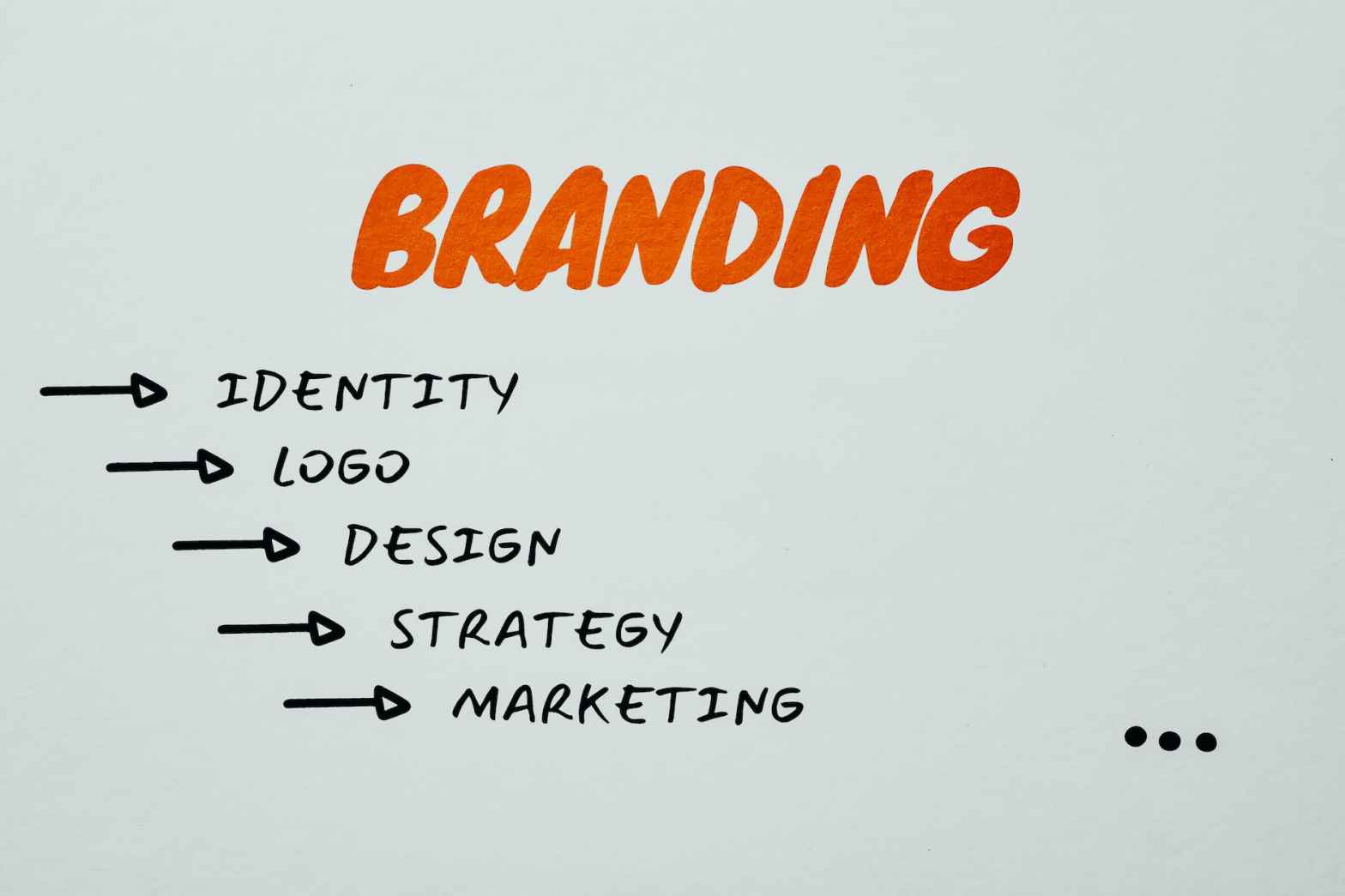
Many think that both branding and marketing are the same and focus only on one activity. It is not so. A brand is assiduously built over a longer period of time and marketing is all about maximising sales revenue y-o-y. A Brand is nurtured to retain customer loyalty, confidence, trust and fairness in dealing with both internal and external customers. A well positioned brand immensely helps the marketing team to increase the sales and the reach. Large corporates don’t have a brand manager but a brand custodian as he is devil’s advocate inside the company to oppose any action that will tarnish the image of the brand. 

Communication is an important element in both branding and marketing exercises. As Peter Drucker said, the most important thing in communication is hearing what is not said and branding is the perfect example. 

We have seen the successes of many Indian consumer brands – TATA, Amul, Reliance, Maruti, ITC, Wipro, Bajaj, Dabur, IPL to name a few. But some brands have failed – Kingfisher, HMT, Jet Airways, Sahara, Onida – because there was no sustained effort and financial discipline from their management teams to keep the brand alive and they were not innovative. 

Build Better Brands for a long haul – hope the new age start-ups thriving on huge funding sustain their momentum to stay alive on their own feet. Otherwise investors will be the losers. 

 #sales #management #branding #marketing 

Are we unique?

What makes some of us think that we are unique and way ahead than the others – Achievements? Salary? Position? Clout? Social followers? Skills? Degrees? 

Making the best use of available opportunities, having the willingness to mutually exchange advantages to collaborate with others and co-creating successful careers or business models are essential to become unique.

It is not about what we think of ourselves but what others think of us and acknowledge that we are way ahead of the rest.

 #opportunities #businessmodels #careers

Pride & Humility

They never walk together as long as we know the difference between “who is right” and “what is right”.

No one teaches you the difference either.It is how we shape ourselves to learn the difference through our experiences and feedback from others.

It is a struggle we encounter every day. The sooner we tame it, the better for our peaceful living.